
 English
-
 English
 -
Русский язык
-
Português
-
Tiếng Việt
-
IndonesiaName
-
繁體中文
-
عربي
-
Français
-
ภาษาไทย
-
Español



CATEGORIES
NEWS
-
Maintenance Functions of Rubber Expansion Joints in Operation
Periodic maintenance can reduce rubber expansion joint failure rates by over 60%. A typical case shows that after scheduled maintenance, a petrochemical enterprise extended the compensator replacement cycle from 3 to 7 years, decreasing annual maintenance costs by 40%.
MORE -
PTFE-Lined Bellows Compensator
Refers to the inner wall of the bellows compensator coated with polytetrafluoroethylene (PTFE), which utilizes its properties of strong resistance to strong acids/alkalis, high temperature (below 260℃), and low friction coefficient to withstand corrosive media
MORE -
Detailed Guide to Welding Technology for Large-Diameter Bellows Compensators
Through material matching, precise heat input control, deformation prevention, and full-process quality inspection, ensure weld joints meet strict requirements for high pressure, low temperature, corrosion, etc
MORE -
Differences Between Metal Bellows and Rubber Bellows
Choose between metal and rubber bellows by evaluating medium type, pressure, temperature, environmental conditions, and application scenarios: Metal bellows suit harsh conditions like high pressure, extreme temperatures, or corrosion, while rubber bellows excel in low-pressure, vibration-damping, and flexible connection needs.
MORE -
Types and Selection of Metal Bellows
The selection of metal bellows should be based on "operating parameters as the foundation, structural materials as the core, and compensation requirements as the guide". Through precise calculation of the coupling effect of pressure-temperature-displacement, combined with medium characteristics and installation environment, the optimal structure type and material combination are selected. For critical systems (e.g., nuclear power, aerospace), additional finite element analysis (FEA) and burst te
MORE




-
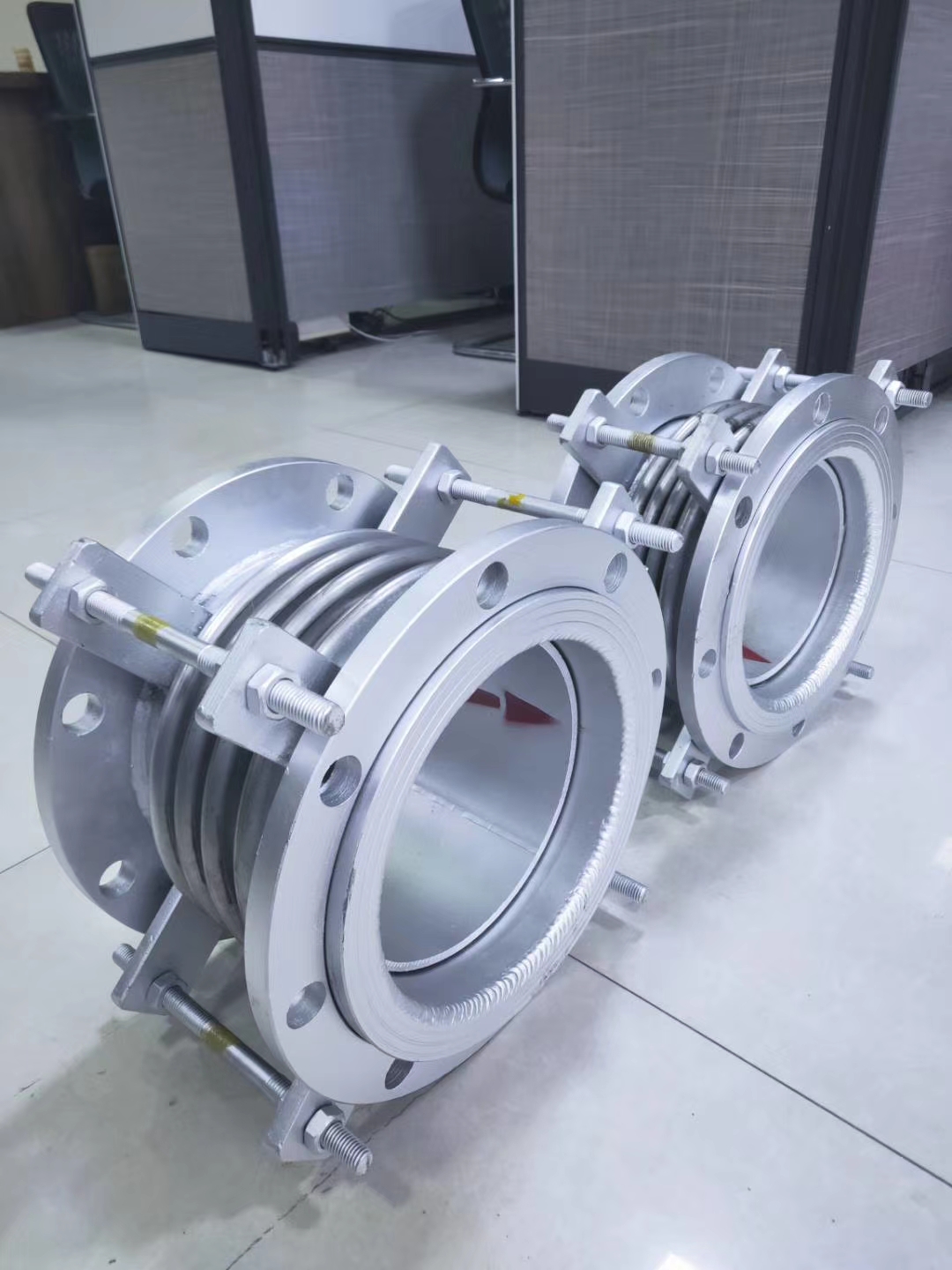
Core Selection Guide for Pipeline Compensation: Bellows Expansion Joint vs Rubber Expansion Joint
This article compares the core differences between bellows expansion joints and rubber expansion joints in industrial piping systems. It analyzes their structures, materials, and performance parameters. Bellows expansion joints, made of stainless steel, excel in high-temperature, high-pressure, and large-displacement conditions. Rubber expansion joints, featuring synthetic rubber, shine in medium-low pressure liquid transportation, vibration isolation, and cost-effectiveness. For foreign trade,
MORE -
Detailed Explanation of DN 1200 Flanged Rubber Expansion Joint
DN1200 Flanged Rubber expansion bellow is ready. This is professionalism.
MORE -
What are the connections of the silk buckle rubber joints
Wire Buckle Rubber Joint is a common piping connector, which is usually made of
MORE -
DN150 Metal Hose
I. Installation Key PointsPretreatment InspectionBefore installation, check that
MORE -
Single-Sphere Rubber Flexible Joint
Wire-reinforced skeleton: Enhances vacuum resistance to prevent pipeline collapse (suitable for vacuum systems). Connection Types: Customizable to grooved (coupling) or threaded connections besides flanges for different pipeline systems.
MORE -
Specification of Fatigue Test Requirements for Fabric Expansion Joints
Fabric expansion joints (also known as fabric compensators), as flexible pipeline connectors, are widely used in high-temperature and vibrating environments such as flue gas ducts and air ducts. Their fatigue performance directly affects the safety and service life of equipment.
MORE -
Advantages of Epoxy Paint Spraying for Double Flange Limited Expansion Joints
Spraying epoxy paint on double flange limited expansion joints offers comprehensive advantages in corrosion protection, mechanical durability, and ease of use. This ensures the sealing and safety of pipeline systems, especially in high-corrosion fields like chemical, municipal, power, and metallurgical industries. In the long term, it significantly reduces equipment replacement and maintenance costs, enhancing project reliability.
MORE -
Three-Dimensional Compensator for Coal Ash Pipeline
Three-dimensional compensators for coal ash pipelines solve wear and clogging issues of traditional compensators in dusty environments through multi-directional compensation and anti-wear designs. When selecting, key considerations include coal ash particle characteristics (size, flow velocity, temperature), and it is recommended to use pipeline stress analysis software (e.g., CAESAR II) for precise design to ensure system service life ≥5 years.
MORE -
Thrust-Free Sleeve Compensator Technical Overview
Thrust-free sleeve compensators significantly reduce pipeline system reliance on fixed supports through pressure self-balancing design, especially suitable for large-diameter and high-pressure conditions. When selecting, focus on medium temperature, compensation amount, and installation space. It is recommended to collaborate with design institutes for mechanical calculations to ensure long-term reliable operation.
MORE -
What is the distance interval for installing corrugated compensators on steam pipelines?
The installation spacing of bellows compensators in steam pipelines should be determined by comprehensive consideration of pipeline material, operating temperature, pressure, and fixed support arrangement.
MORE





点击右上角
分享给朋友吧
Copyright © 2005-2015 Shengshi New Material Technology Co., Ltd.

 Contact 1
